
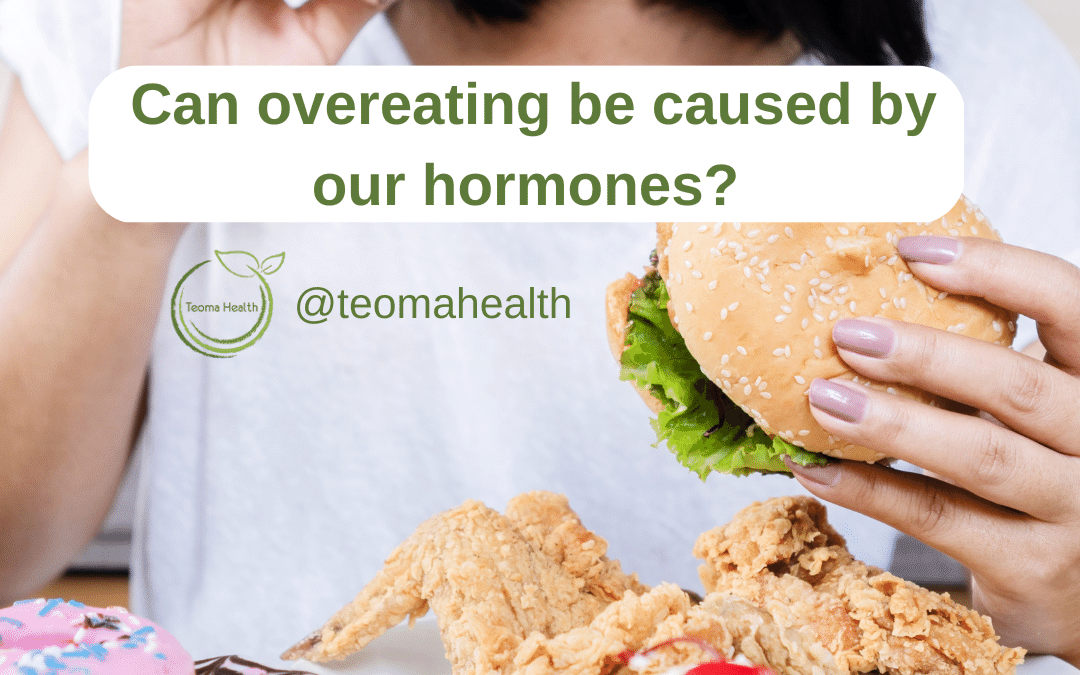
Have you ever sought the comfort of food when you are feeling stressed?
Did you know that the hormones estrogen and progesterone, produced in women’s ovaries, can trigger emotional and binge eating during your menstrual cycle? This can manifest in different ways for different women at different points in their cycles.
For example, high levels of estrogen and progesterone have been linked to cravings of sweet or salty food and emotional triggers, which can themselves develop into eating disorders. Since estrogen and progesterone hormones release every month, the connection can be made that they can also control disordered eating habits—namely binge eating or emotional eating. When we repeat this monthly behaviour of disordered emotional eating, it can influence our long-term eating habits.
Stress can be a cause of overeating
Have you ever sought the comfort of food when you are feeling stressed? Perhaps you reach for chocolate or a bag of salty chips when you are struggling to cope. This is commonly called "stress eating."
Stress can push many people towards overeating. Stress is at the root cause of many chronic health issues and very well may be at the root of your anxiety too.
Chronic stress can put a burden on our adrenal glands, resulting in an excess of stress hormones like cortisol. Our body’s repeated exposure to cortisol can result in:
- Increased blood sugar levels
- Increased heart rate
- Increased blood pressure
All of these can lead to feelings of anxiety.
Studies have linked weight gain to stress, and alarmingly, according to different surveys, 28% of Australians aged 16-40 years, report their stress levels to be 7 or more on a 10-point scale.
In the short term, stress can shut down your appetite. Your nervous system sends messages to the adrenal glands (the little hormone atop of the kidneys) to pump out adrenaline (epinephrine hormone). Epinephrine helps trigger the body's fight-or-flight response that temporarily puts eating on hold.
But if stress persists, the adrenal glands also release cortisol, and this hormone increases appetite and may also ramp up your motivation to eat, overeat or binge. Once a stressful episode is over, cortisol levels should fall, but if the stress doesn't go away cortisol may stay elevated, and your appetite can remain increased.
Adrenal dysfunction mostly arises when your hypothalamic-pituitary-adrenal (HPA) axis is not able to effectively manage your stress response.
Emotional eating, hormones and hunger?
Did you know that stress may also affect your food preferences? Studies have shown that physical or emotional distress increases your desire to eat food high in fat, sugar, or both. High cortisol levels, in combination with high insulin levels, may be responsible for this food preference. It has been shown that ghrelin, a "hunger hormone," may have a role too.
Once you have eaten fat and sugar-filled foods, they give a feedback effect that reduces your stress related responses and emotions. This is why they really are known as “comfort” foods. They provide temporary stress relief, but may also contribute to your stress-induced cravings for those kinds of foods.
Of course, overeating isn't the only stress-related behavior that can add kilos. When you are stressed, you may also lose sleep, exercise less and drink more alcohol, all of which can contribute to gaining excess weight.
Studies have shown an interesting difference in stress-coping behavior between women and men. They show that women are more likely to turn to food when feeling stress, whereas men are more likely to turn to alcohol and smoking. Obesity was shown to be associated with stress-related eating in women, but not in men.
How can you break the cycle?
Now that you can see how our fluctuating female hormones, adrenal exhaustion with high cortisol can lead to weight gain. How can you break the cycle of overeating?
A great way to begin is to stick with a regular eating schedule. Give yourself set times during the day for eating meals. You may find it difficult to eat to your schedule at first, but even if you aren’t hungry for a full meal at your set time, try eating a small snack instead.
Eating on a schedule will boost your metabolism, ultimately making it work faster to use more energy from the food.
It is vital to keep a consistent eating schedule to support your body from craving food during specific times of the day. If hormones are released that cause you to crave to the point of bingeing, your body will already be used to the schedule you set for it. Hormonal triggers will thus have less of an impact on your eating habits.
Be consistent, take the time to nourish your body, and it is important to be patient and understanding with yourself about the change your body is going through.
If you are finding it difficult to fight hormonal cravings, you may find that boredom is a factor in this. Here are some different things you can try to prevent the cravings and eat more mindfully:
- Accept the craving and move on. Allow the thought to enter your mind, then let it leave as it is no longer serving a purpose for your wellbeing.
- Go for a walk, exercise is a great way to relieve stress.
- Practise daily meditation: see the Insight timer App for some great ideas.
- Organise, plan and prepare your meals in advance.
- Gradually reduce your caffeine intake. This may reduce your anxiety levels as caffeine forces more glucose to be produced by your liver, sending your body on a blood sugar rollercoaster that can trigger anxiety.
- Keep snacks available that align with your eating habits.
- Get in touch with a friend or family member for support and to help keep you accountable.
If you would like to discuss your own hormonal health or stress levels with me, please email me at nancy@teomahealth.com.au or head to my Contact page to book an appointment.
Your point of view caught my eye and was very interesting. Thanks. I have a question for you.
https://shorturl.fm/R80ow
Your article helped me a lot, is there any more related content? Thanks! https://accounts.binance.info/id/register?ref=UM6SMJM3
I don’t think the title of your article matches the content lol. Just kidding, mainly because I had some doubts after reading the article. https://www.binance.info/es/register?ref=RQUR4BEO
Your point of view caught my eye and was very interesting. Thanks. I have a question for you.
Drive sales and watch your affiliate earnings soar!
Unlock exclusive rewards with every referral—enroll now!
Share your unique link and cash in—join now!
Your point of view caught my eye and was very interesting. Thanks. I have a question for you.
I don’t think the title of your article matches the content lol. Just kidding, mainly because I had some doubts after reading the article. https://accounts.binance.com/fr-AF/register-person?ref=JHQQKNKN
Can you be more specific about the content of your article? After reading it, I still have some doubts. Hope you can help me.
Thanks for sharing. I read many of your blog posts, cool, your blog is very good.
Your audience, your profits—become an affiliate today!